

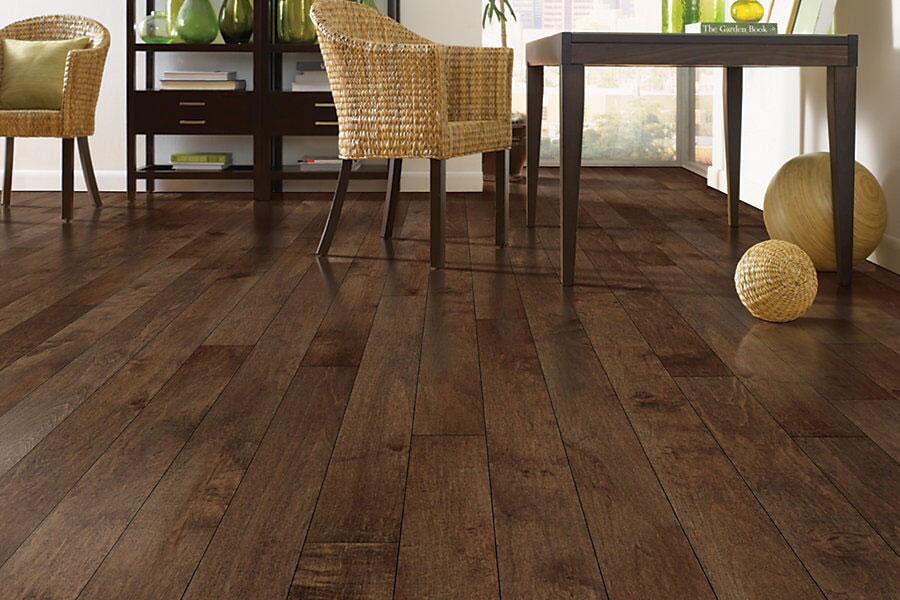
Few home upgrades match the timeless allure, elegant aesthetic, and long-term value of authentic wood flooring. When property owners decide to invest in natural wood surfaces, they are quickly met with a critical technical decision: should they install solid hardwood or engineered hardwood flooring? Both options bring genuine lumber surfaces to your living space, yet they are manufactured differently and react uniquely to structural environments. Making the right choice requires a clear understanding of how these materials handle humidity shifts, foot traffic, and installation requirements over time.
The Anatomy of Solid Hardwood Flooring
Solid wood is exactly what it sounds like—a single, continuous piece of genuine lumber cut straight from a tree trunk, milled into a plank, and finished with a protective top layer. Because it is uniform material all the way through, solid hardwood flooring has an exceptionally long lifespan. It can be sanded down, repaired, and completely refinished multiple times over many decades to erase surface scratches or change the stain color entirely.
However, solid timber is inherently susceptible to its surrounding climate. Wood naturally absorbs and releases moisture. During humid Midwest summers, solid planks expand, and during dry winters, they contract. If structural moisture is not carefully managed, this movement can cause irreversible cupping, crowning, or gapping between planks. For this reason, solid wood flooring must be nailed or stapled down to a wood subfloor and is strictly restricted to ground-level or upper-floor rooms.
The Engineering Behind Modern Wood Planks
Engineered hardwood flooring was specifically designed to solve the structural stability limitations of solid timber. Instead of a single piece of wood, an engineered plank consists of a core constructed from multiple layers of high-density fiberboard or cross-ply plywood running in alternating directions. This core is capped with a top layer of real, premium hardwood called a wear layer.
The cross-grain construction of the core counteracts the natural tendency of wood to expand and contract. This makes engineered hardwood highly dimensionally stable, allowing it to withstand major moisture and temperature fluctuations without warping. Consequently, it can be safely installed in areas where solid wood fails, including basements, concrete slabs, and over radiant heating systems. It also supports flexible installation options, as it can be glued, stapled, or installed as a floating floor.
Selecting the Perfect Match for Your Home
When deciding between these two premium materials, your home’s architectural layout and daily lifestyle should be your main guides. If you are renovating a damp basement or installing floors directly over a concrete foundation, engineered wood is technically superior. If you are updating a traditional living room with a sturdy wood subfloor and want an investment that can be passed down through generations, solid wood remains a premier choice.
At Carpets Plus Outlet, our family-owned team utilizes decades of localized knowledge to help you find durable surfaces that match your design goals and budget. You can learn more about our commitment to bringing top-tier products to the community by reading our About Us story.
Whether you favor the rugged charm of character-grade hickory or the clean, uniform look of select white oak, seeing physical planks in natural light is an essential step. To view the region's largest selection of in-stock hardwood options, find directions to our showroom on our Location page and talk directly with our design professionals today.


